 HALVEET
1. Turn the target into a fraction
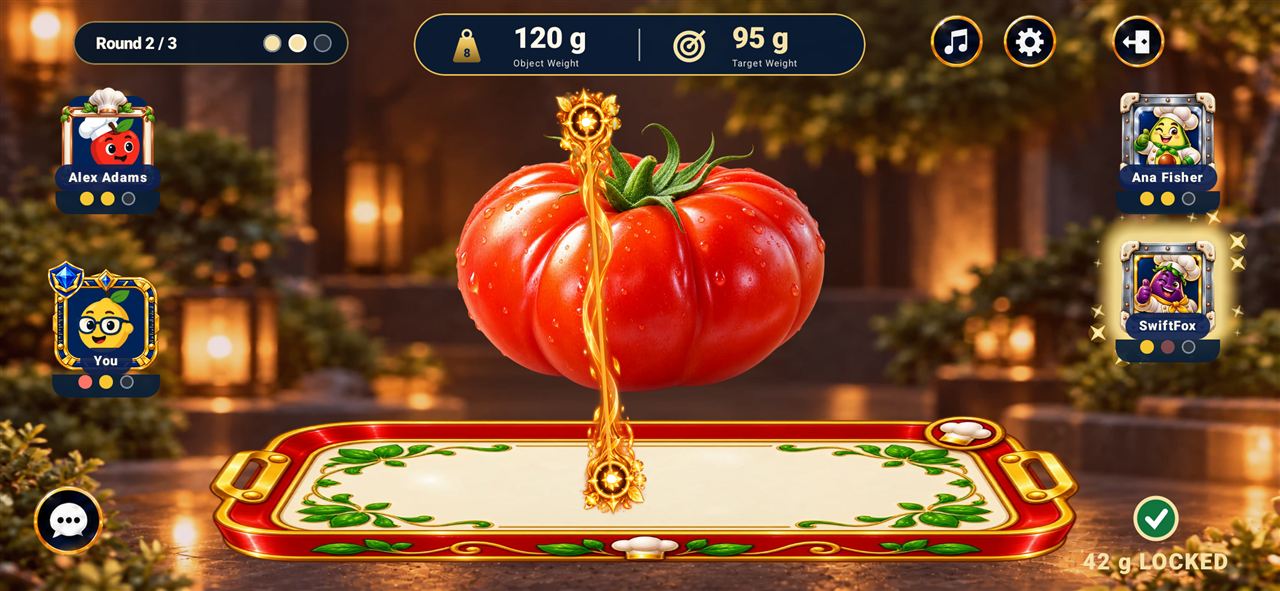
Before you touch the line, work out what share of the food you need. 410 g of a 980 g watermelon is a little over 40%. A fraction is far easier to aim at than a number of grams.
2. Remember: the middle isn’t half the weight
On tapered foods – carrots, croissants, bananas – the thick end holds more weight. Halfway along the length is rarely half the weight.
3. Tilt for long foods
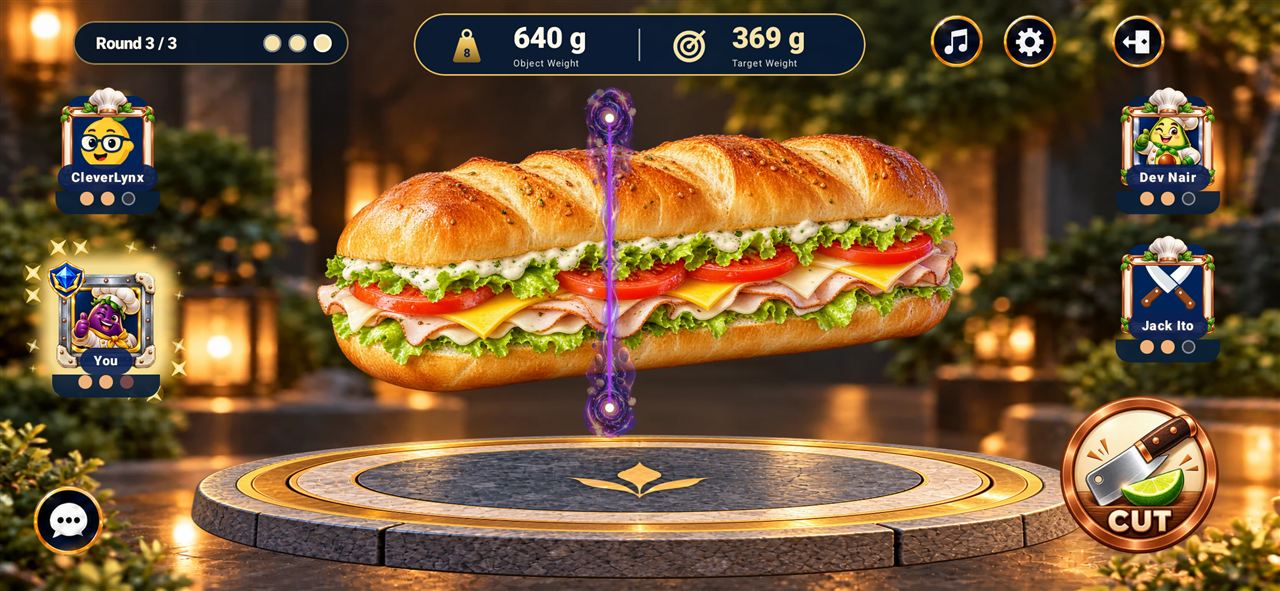
Dragging the ends of the line lets you take a thin diagonal piece from a cucumber or carrot when a straight cut would be too coarse.
4. Decide which piece you will keep first
Small targets are easier to judge as a small piece; large targets as everything except a small piece. Plan for the piece you will keep.
5. Account for holes and gaps
A donut’s centre and a cake’s layers change where the weight sits. Look at the solid area, not the outline.
6. Move once, then fine-tune
Big drags, then tiny nudges. Constant large corrections waste time and tend to overshoot.
7. Commit before the clock does
If the timer runs out, the game cuts for you. A quick, reasoned cut almost always beats it.
8. Save Recuts for real mistakes
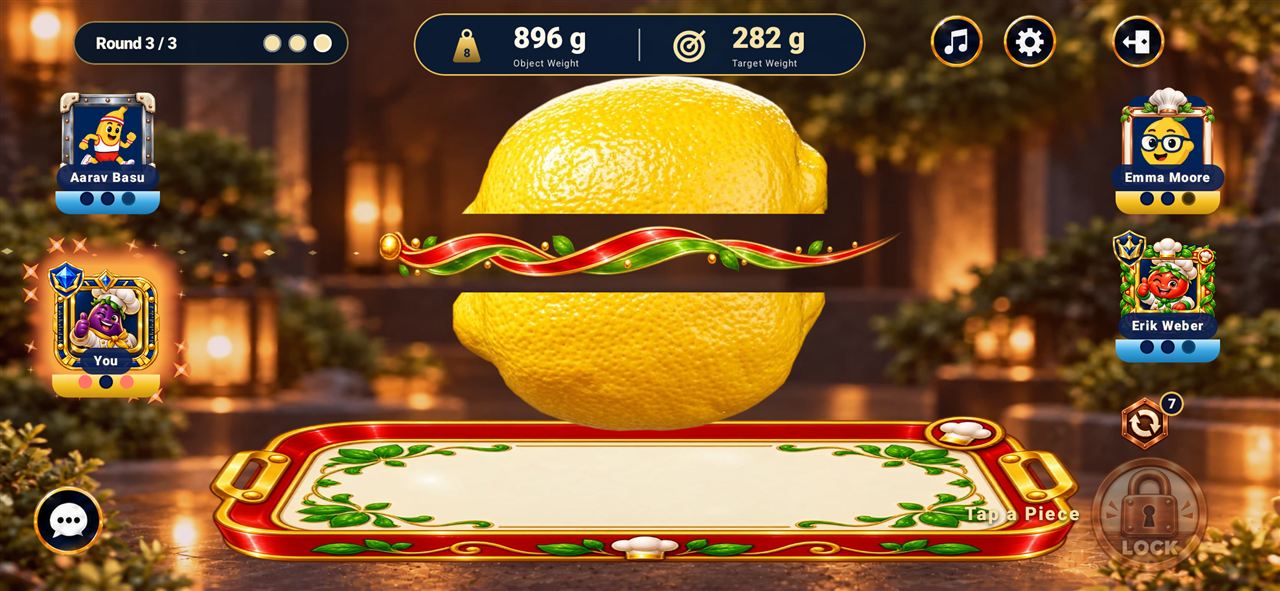
Recuts are limited. Use one when a cut is clearly wrong, not to chase a single gram.
9. Play for the total
Three solid rounds beat one perfect round and two disasters. Avoid big misses.
10. Learn each food
There are 24 foods. Each one has a shape you’ll learn to read faster every time you see it.