 HALVEET
The difference in one sentence
In a skill game, the better player usually wins over time. In a luck game, results are mostly decided by chance – dice, shuffled cards or random draws.
A three-question test
- Do all players face the same conditions? If one player draws better cards, luck matters.
- Would a beginner beat an expert often? If yes, it is mostly luck.
- Does practice make you better? Skill games reward practice.
Examples on the spectrum
| Game | Where luck comes from | Mostly… |
|---|---|---|
| Snakes and Ladders | Every move is a dice roll | Luck |
| Ludo | Dice, with some choices | Luck with some skill |
| UNO | Card draws, with tactics | Mixed |
| Rummy | The deal, then much skill | Skill with some luck |
| Chess | None | Skill |
| Halveet | None – same food and target for all | Skill |
Why the difference matters
Luck games are great for mixed groups: anyone can win, and nobody feels outclassed. Skill games are great when you want effort to show: practice pays off, and wins feel earned. Many favourite games sit in between.
Can a game mix both?
Yes. Card games like rummy add a lucky deal to skilful play. Over many games, the skilful player still comes out ahead – the luck evens out. In a pure skill game such as chess or Halveet, there is no luck to even out at all.
How Halveet keeps luck out
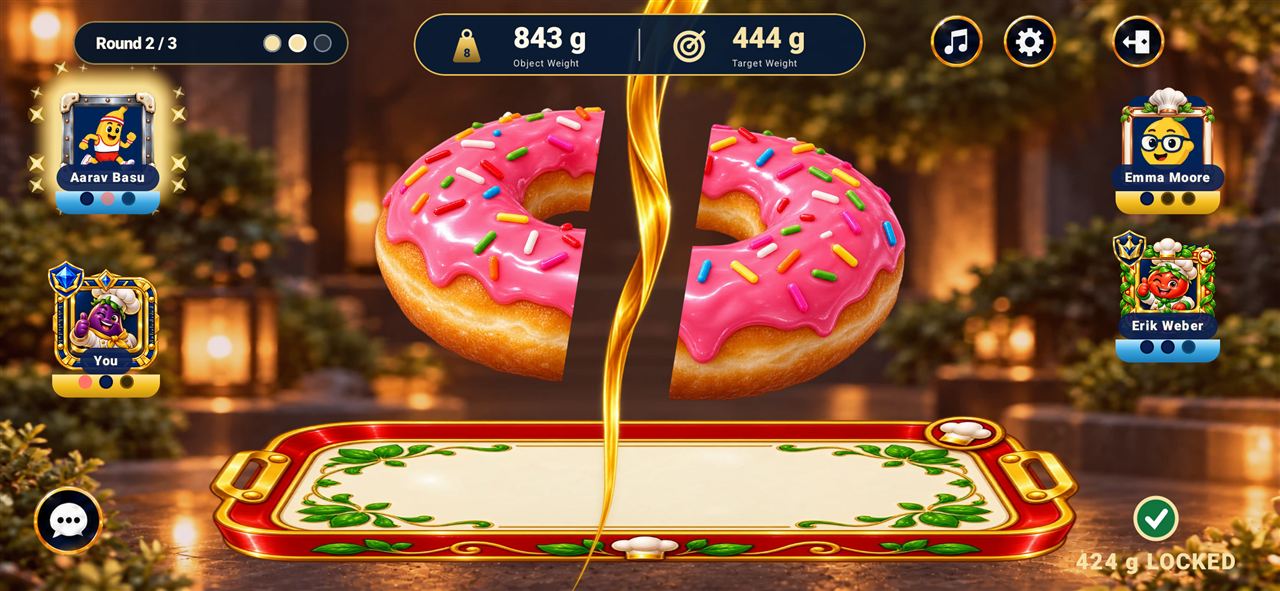
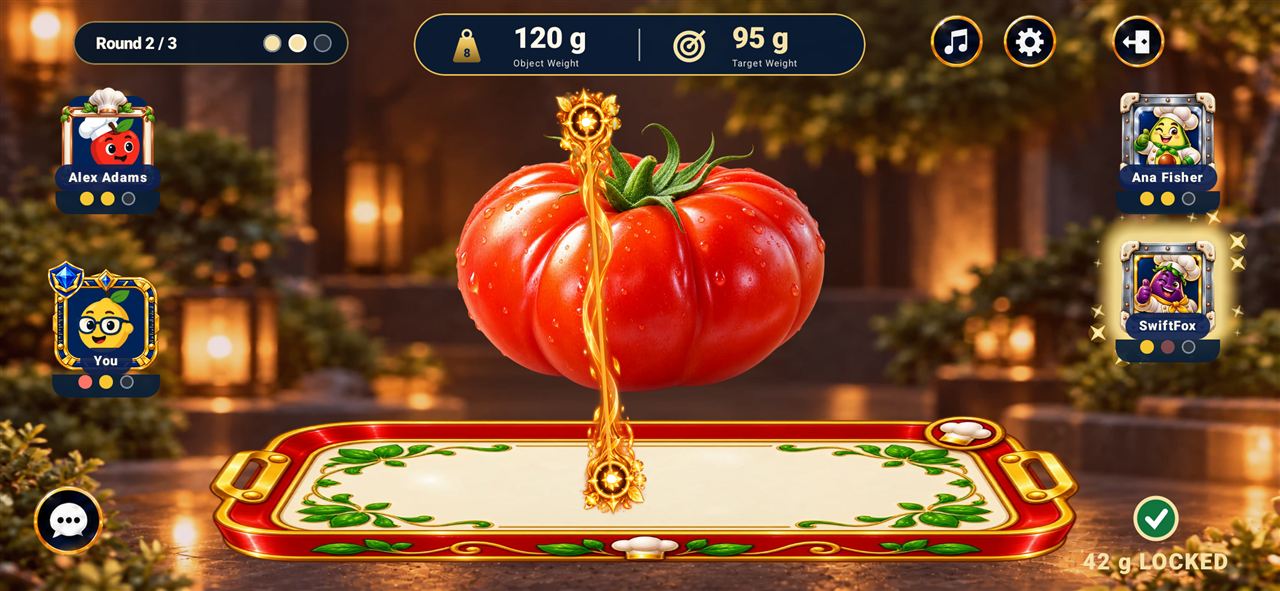
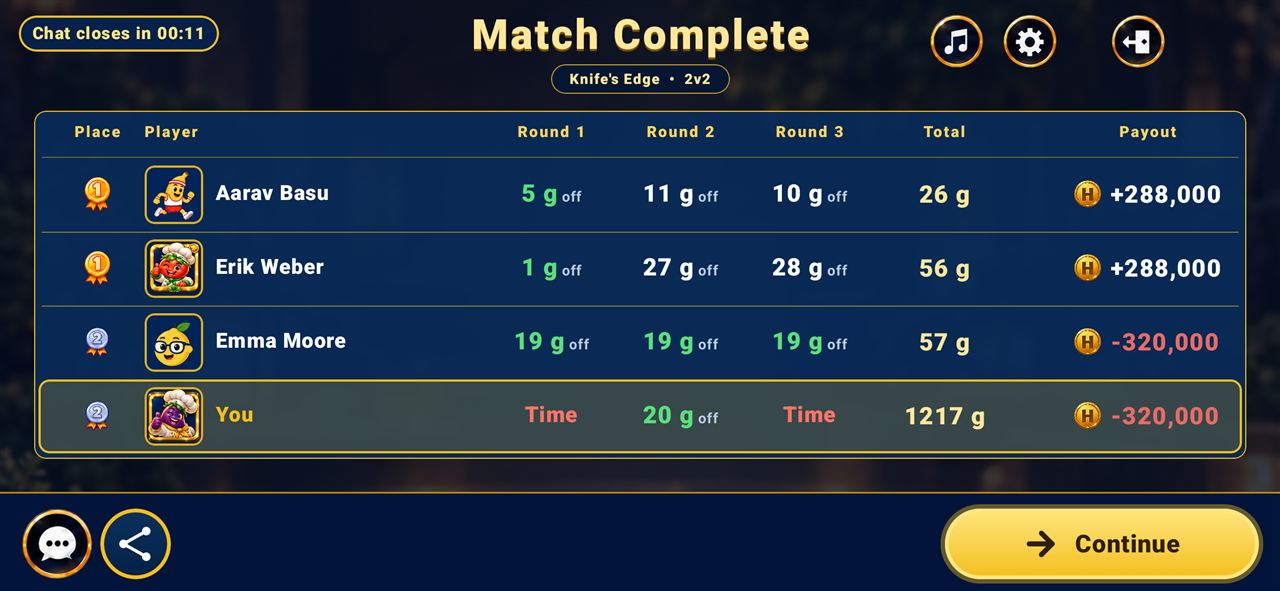
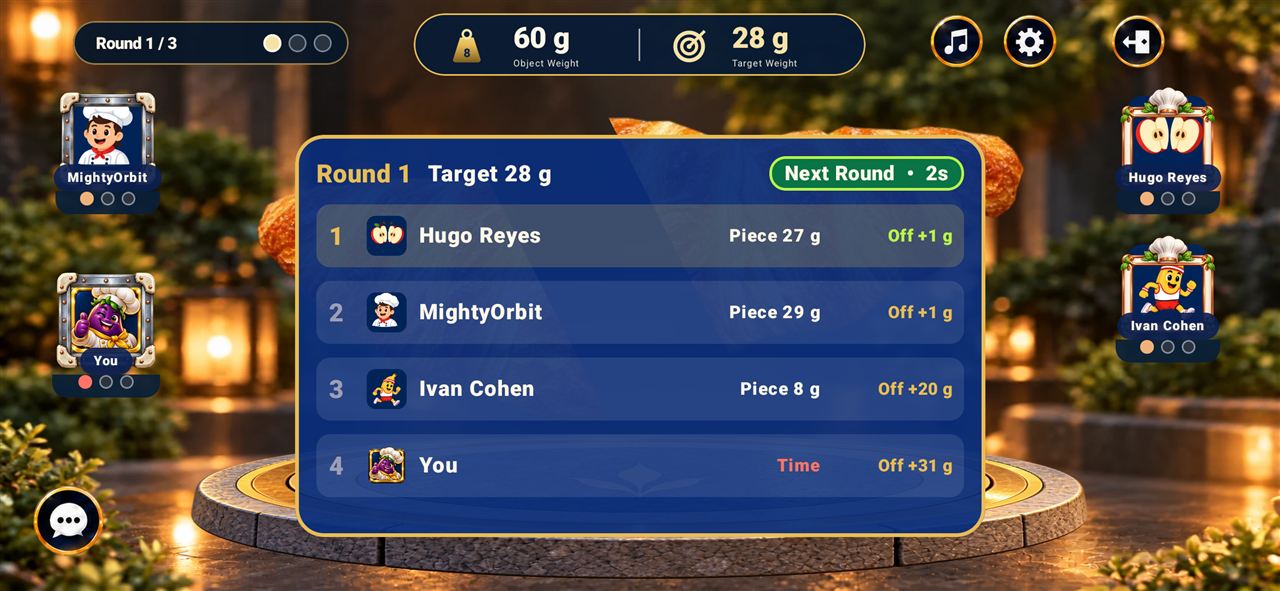
Every player at a Halveet table cuts the same food to the same target weight. Your score is how many grams you land from the target – nothing is drawn, rolled or shuffled for you. Over three rounds, the most accurate player wins.
Halveet uses virtual Coins only. There are no cash prizes, and Coins cannot be withdrawn.